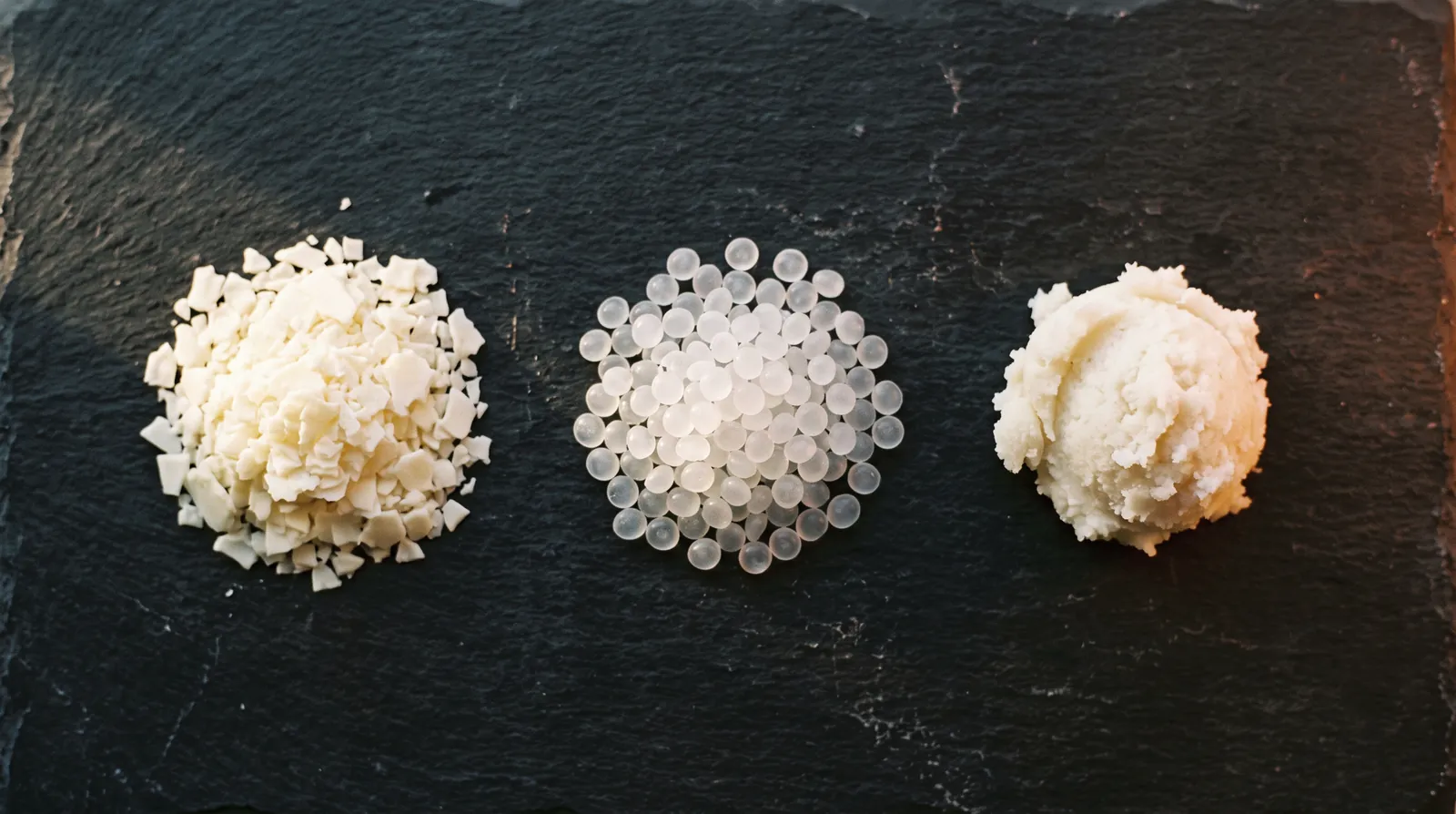
The short versionParaffin throws hardest, coconut blends give you most of that throw with far less soot, and pure soy is the cleanest burn but needs a well-built candle behind it to compete.
Wax is the single biggest driver of how a candle behaves, and it is the specification brands are least willing to publish. Three of the ten brands in our index describe their wax only as a proprietary blend. So we stopped asking and started measuring: 35 units, 2,110 logged burn hours, the same room every time.
What each wax is doing
A candle is a fragrance delivery system with a fuel problem. The wax has to hold fragrance oil in suspension when cold, release it into the air when hot, and burn cleanly on the way through. No wax is good at all three.
Paraffin
Paraffin is a petroleum byproduct and it is the best fragrance carrier in the business. It holds a higher oil load than soy, melts at a lower temperature, and releases scent faster. Every one of the fastest melt pool times in our test came from a candle with paraffin in it. The cost is soot: our straight paraffin unit showed heavy carbon on the glass from hour 50, and the same candle in a closed 10 by 10 room is noticeably smoky by hour three.
Soy
Soy is a vegetable wax with a higher melting point and a lower oil capacity. It burns slowly and cleanly, which is why our pure soy candles finished with the least carbon and the lowest residue. The classic soy failure is a candle that smells wonderful unlit and disappears four feet from the wick. That is a formulation problem rather than a soy problem, and the top of our index proves it: the best hot throw we measured from any soy candle came from a 100 percent soy pour.
Coconut and coconut blends
Coconut wax is the compromise that has quietly taken over the independent tier. It carries fragrance oil nearly as well as paraffin and burns close to as cleanly as soy. The tradeoff is physical: coconut wax stays soft, so it pools deep and fast and it leaves more unburnable residue at the bottom. The two deepest end-of-life residue readings in our test were both coconut blends.
| Wax | Throw | Soot | End residue | Typical price band |
|---|---|---|---|---|
| Paraffin | Strongest | Heaviest | 10 mm | $12 to $35 |
| Paraffin blend | Very strong | Moderate | 6 to 8 mm | $42 to $95 |
| Coconut blend | Strong | Light | 7 to 11 mm | $32 to $62 |
| Soy | Formulation dependent | Lightest | 4 to 5 mm | $40 to $90 |
How to choose
- Large or open plan room, tight budget: paraffin. Nothing else covers that volume at that price.
- Anywhere you sleep or work with the door closed: soy or a coconut blend. Soot in a small closed room is the one genuine air quality issue in this category.
- You want throw and a clean glass: coconut blend. It is the best all-round compromise available right now.
- You keep your vessels: soy. It leaves the least residue and the least carbon, so the glass or ceramic actually cleans up.
One thing the data does not support is the idea that soy is automatically the premium choice. Two of the most expensive candles we tested are paraffin blends and they throw better than anything else on the board. You are choosing a tradeoff, not a tier.
Questions
Is soy wax better than paraffin?
It is cleaner, not better. Soy leaves less soot and less residue. Paraffin carries more fragrance oil and throws further. Which one is better depends entirely on whether you are scenting a closed bedroom or an open plan living room.
Does paraffin wax release toxins?
Paraffin produces more particulate soot than vegetable waxes. In a ventilated room, published studies have not found emissions at levels considered harmful for most people. In a small closed room burned for hours daily, the soot is a legitimate reason to switch to soy or coconut.
Why is my soy candle so weak?
Soy has a lower fragrance oil capacity than paraffin, so a poorly formulated soy candle throws badly. It is not inherent to the wax. Check whether the melt pool reaches the edge of the vessel first, because a tunneled candle throws weakly regardless of wax.